Show the result. State the limit of the evidence.
The repository separates execution benchmarks, research previews, upstream integrations, memory activation, published case studies, and audit examples. Every path states what it supports and where its evidence stops.
A complete run, with the model attached
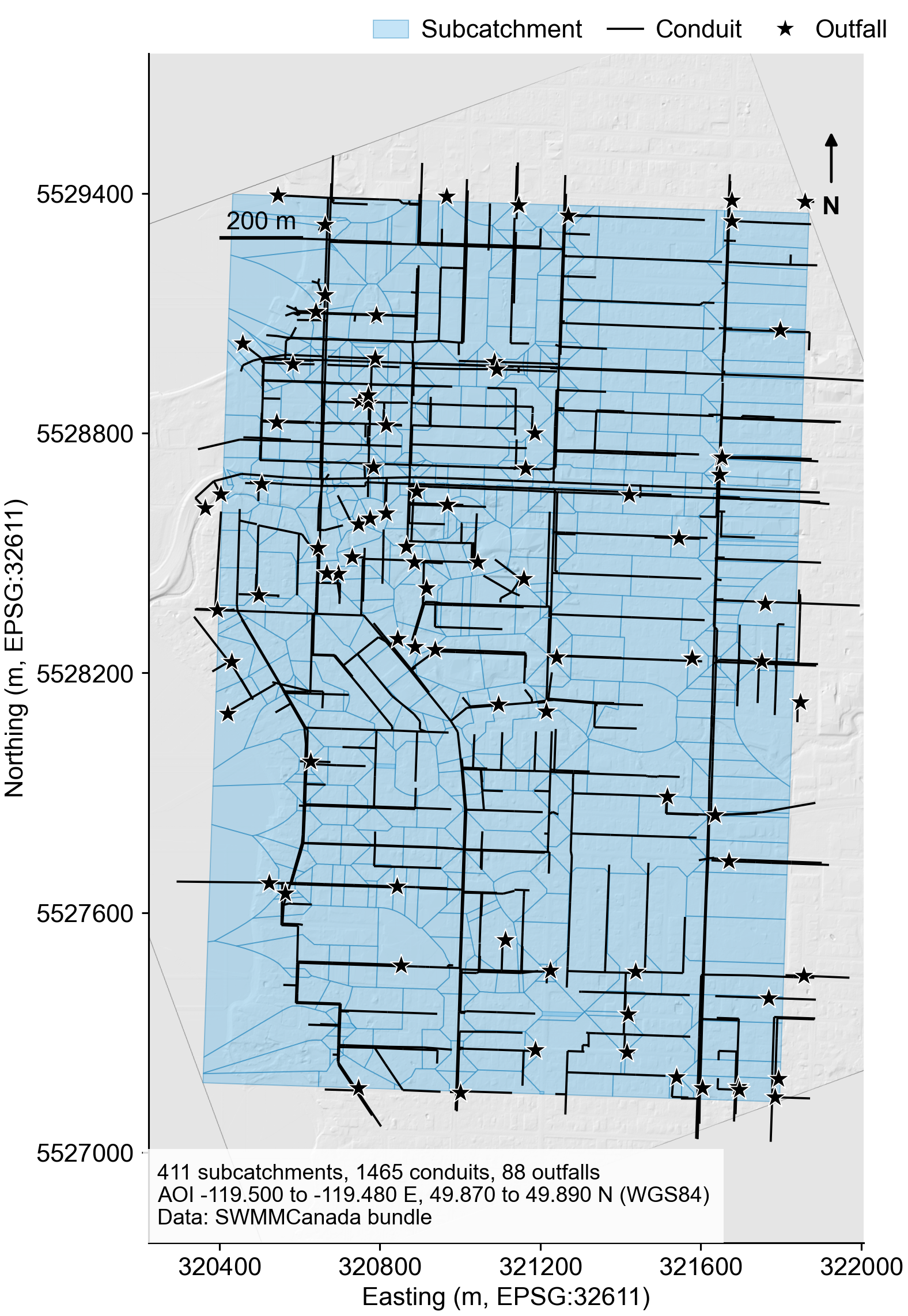
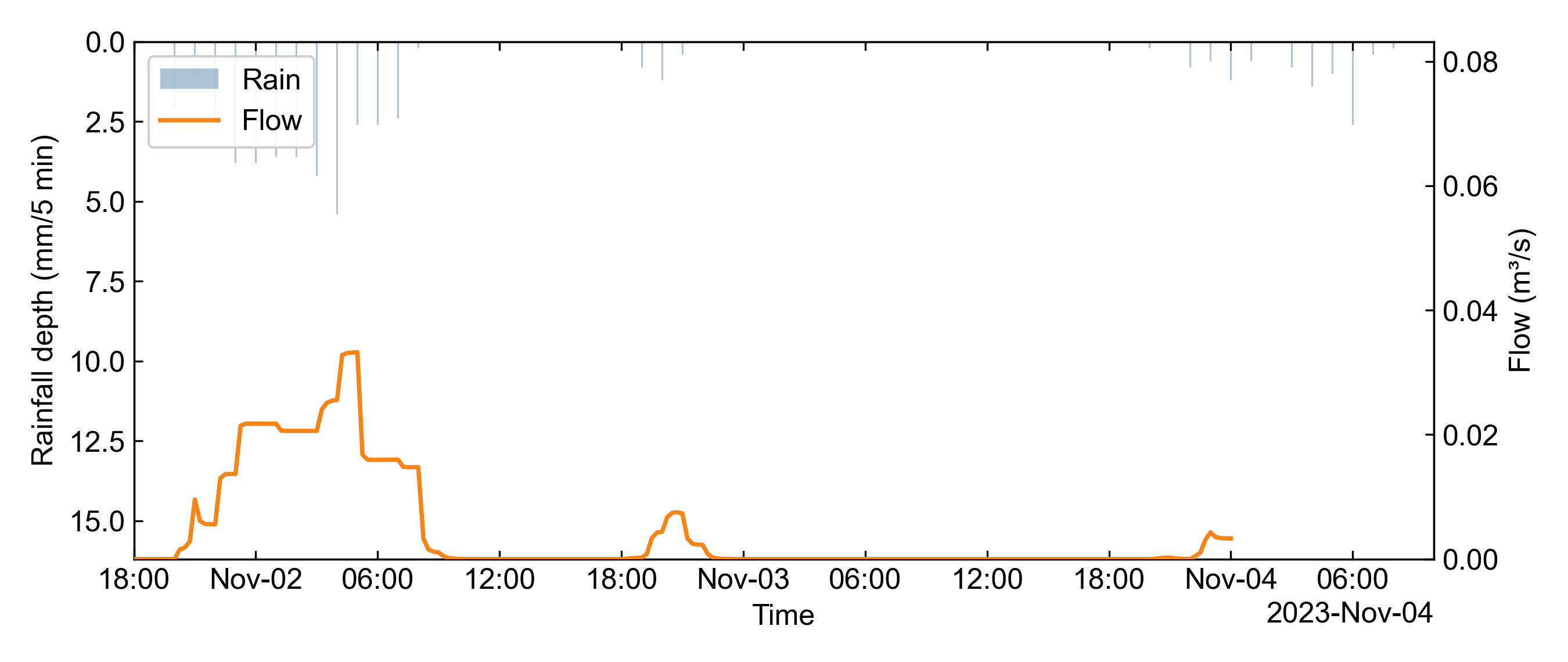
One sentence requested downtown Kelowna for 1–4 November 2023. After one approval, the runtime fetched the model from SWMMCanada, ran EPA SWMM 5.2.4, audited the artifacts, and wrote a Word report. The public case includes the model and the two-turn conversation.
| From the published case | Recorded result |
|---|---|
| Storm system simulated | 411 derived subcatchments · 889 nodes · 832 conduits · 76 outfalls |
| Peak at principal outfall OUT_N467 | 0.130 m³/s |
| System peak outflow across all outfalls | 0.706 m³/s |
| Continuity error | −0.078% runoff · −1.022% routing |
| Artifact audit | Pass · 3 checks · 0 failures |
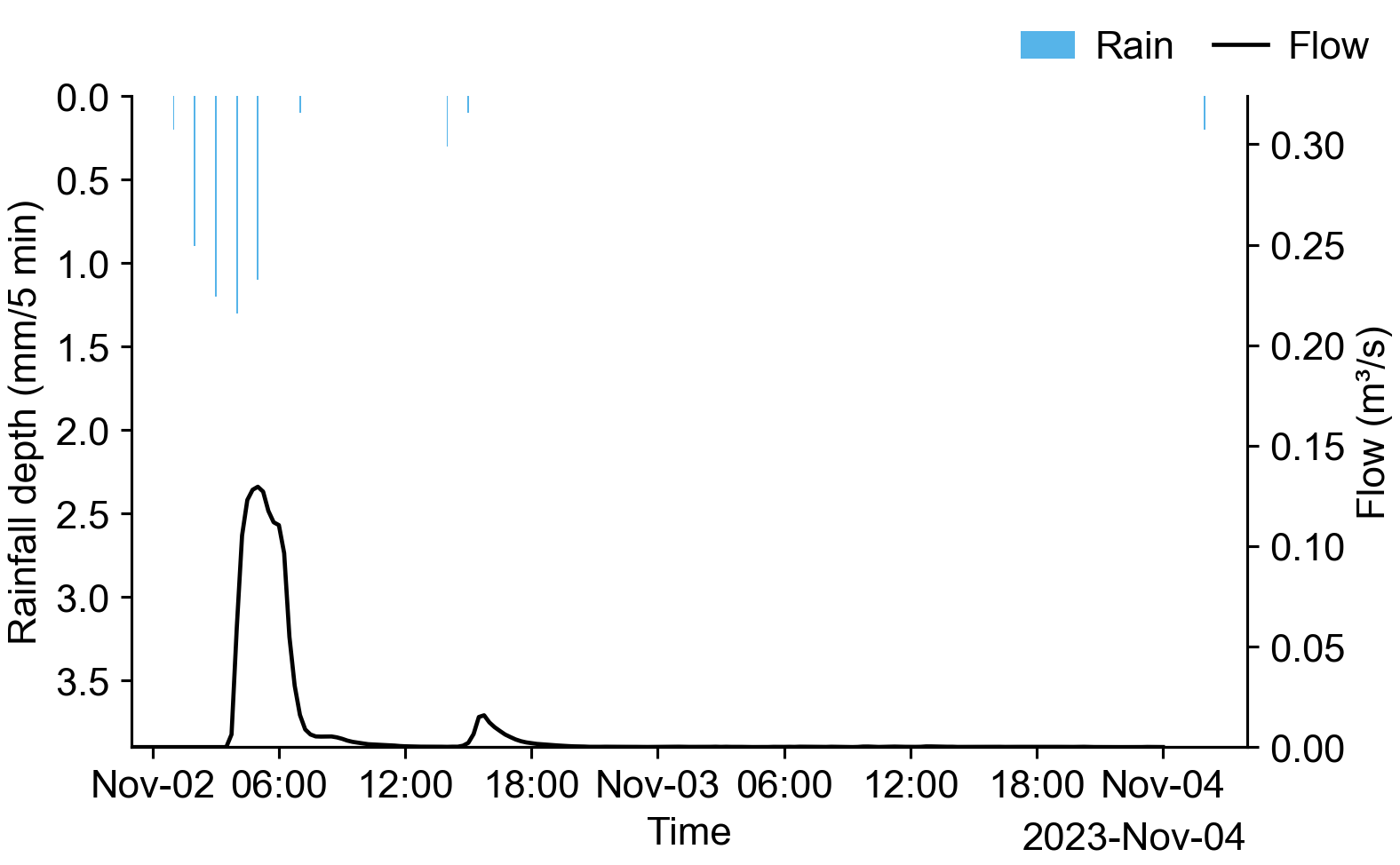
What still needs checking: upstream QA flags 10 uphill conduits and 5 subcatchments whose outlet routing exceeds 50 m. No observed-flow series supports the model. The audit verifies the run’s artifacts and recorded checks; design use still needs geometry review and calibration.
Inspect the study-area map and its network counts
Read the session transcript and the SWMM report excerpts behind the numbers.
Validation snapshot
The repository includes runnable benchmarks and research previews with different evidence boundaries. Each row states what the benchmark actually demonstrates and where its evidence stops — these boundaries are deliberate and verification-first.
Release evidence: the v0.9.4 changelog reports 4,067 tests and sessions across five Canadian cities. The published Kelowna and Victoria cases document workflow behaviour and its limits. These software checks do not establish catchment predictive accuracy.
| Benchmark / Preview | What it shows | Evidence boundary |
|---|---|---|
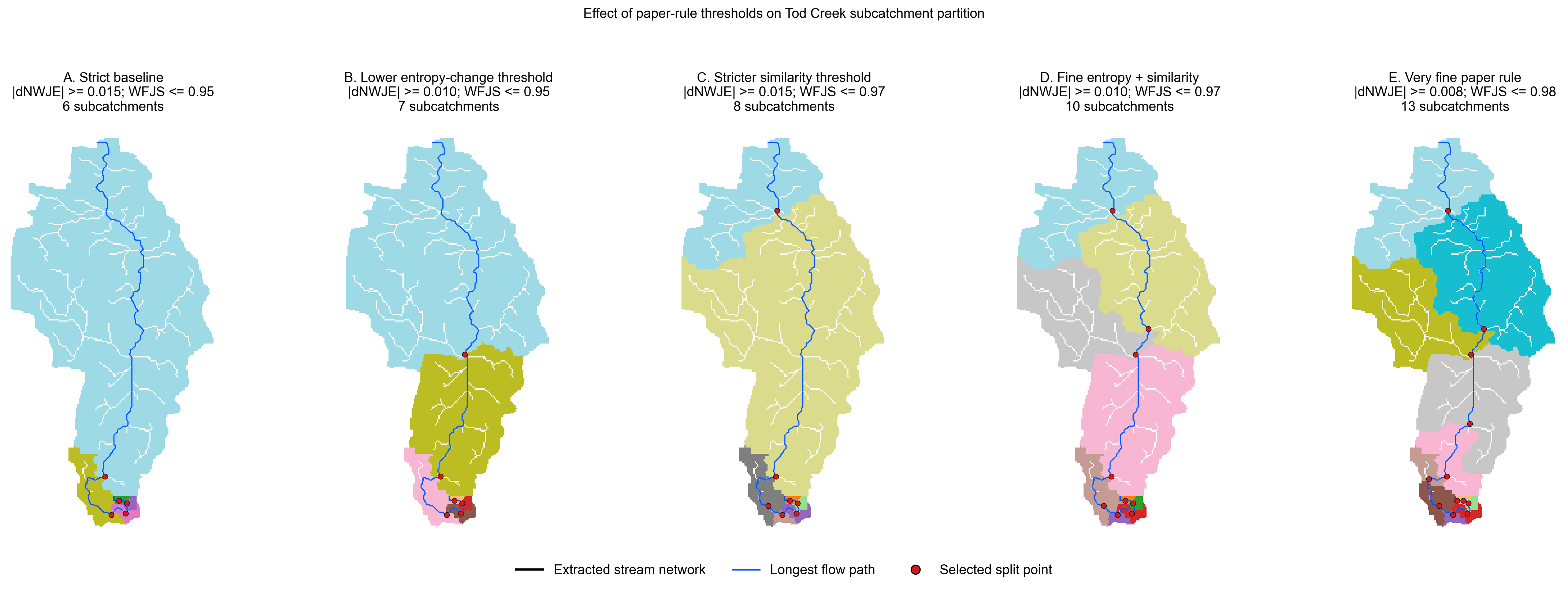
| Information-loss-guided subcatchment partition | QGIS-to-Agentic SWMM preprocessing using entropy and fuzzy-similarity concepts from Zhang & Valeo's Journal of Hydrology paper | GIS preprocessing concept, not a calibrated SWMM performance claim |
| Raw GeoPackage-to-INP benchmark | Public TUFLOW GeoPackage layers converted into SWMM-ready artifacts, QA, and audit | Structured raw GIS path, not arbitrary CAD/GIS recognition |
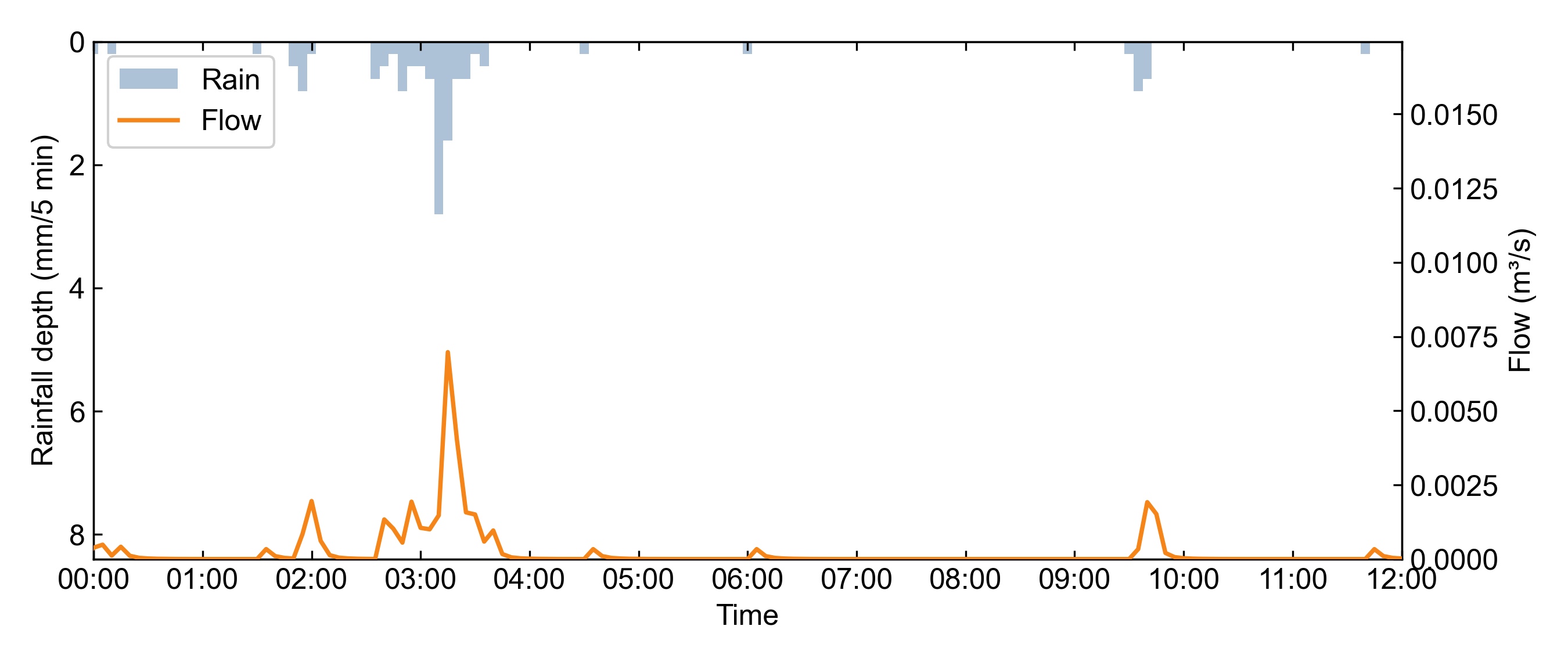
| Prepared-input SWMM benchmark | External 40-subcatchment Tecnopolo model execution, plotting, and direct swmm5 comparison. v0.7.1 re-verification: model.out SHA256 unchanged across the v0.7.0 → v0.7.1 minor revision, with an 11-word natural-language prompt now sufficient to drive the full run-audit-plot chain end-to-end. |
Prepared INP validation path |
| Cross-environment byte-identical reproducibility | A natural-language prompt drives the aiswmm chain to the same byte-identical model.out as bare swmm5, across macOS and Docker |
SWMM execution-layer reproducibility, not agentic workflow reproducibility |
| Cross-session memory autonomously activated | On a real production natural-language run, the LLM planner consulted prior session history without any user instruction to do so — see the v0.7.1 cross-session memory evidence | Historical v0.7.1 evidence that memory retrieval shapes a real run. It does not establish memory accuracy across projects; v0.9.4 adds failure-memory and parameter-record retrieval. |
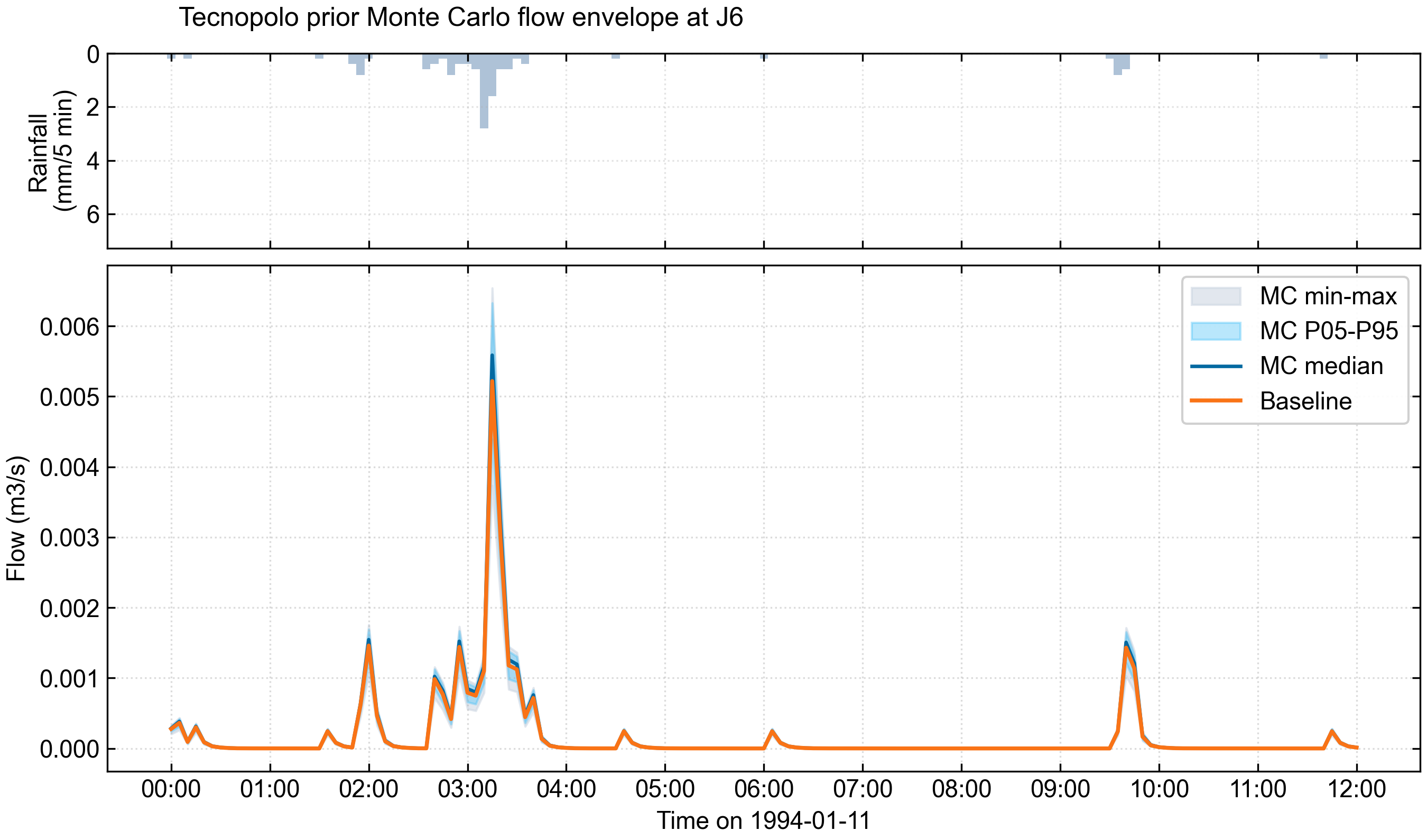
| Prior Monte Carlo uncertainty smoke | Tecnopolo HORTON parameter perturbation and hydrograph envelope preview | Prior uncertainty smoke, not calibration |
| Optional INP-derived raw adapter benchmark | Raw-like inputs extracted from a public SWMM fixture and rebuilt through the modular path | Adapter handoff check, not greenfield watershed generation |
| SWMMCanada upstream adapter | Natural-language dispatch requests a real published municipal storm network through fetch_swmm_from_canada — 35 Canadian cities, or open-data synthesis anywhere else in Canada — unpacks the bundle into 00_raw/, renders a study-area map, and retains the archive and service identifiers in the run artifacts |
Upstream retrieval and provenance path; network quality remains bounded by the selected municipal source data |
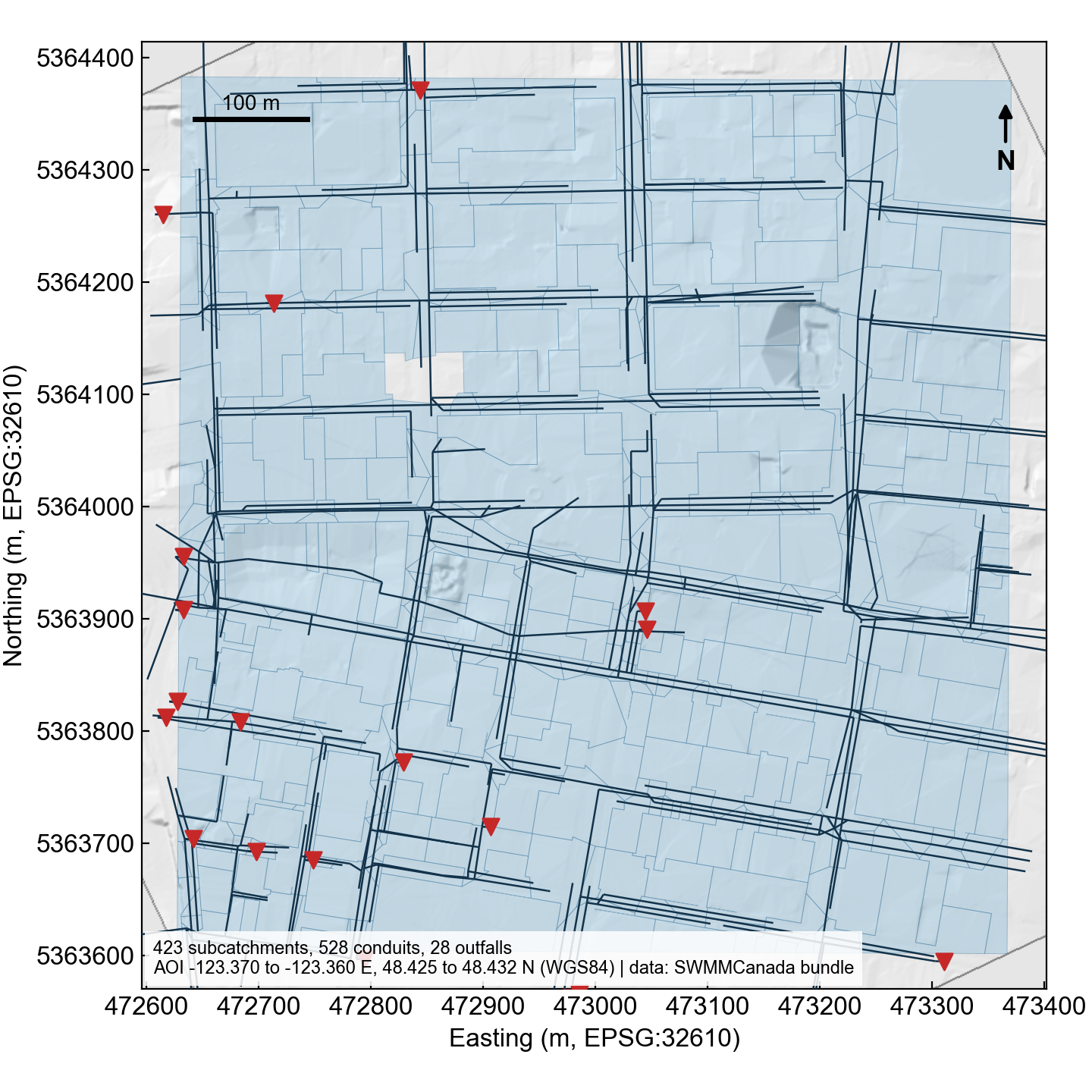
| Case study — one prompt to a client deliverable | A single English sentence fetched the real downtown Victoria, BC storm network (423 subcatchments, 325 nodes, 307 conduits), ran SWMM, audited it, screened it against the design rulebook, plotted the hydrograph, and exported a Word report with figures embedded. Continuity: −0.098% runoff, 0.371% routing. Prompt, numbers, and every artifact | End-to-end workflow conduct on a real network; the model is an uncalibrated first pass, and the design review says so (1 pass, 2 fail, 4 warnings, 4 needs-data) |
| Case study — the run that refused to report results | The same Victoria AOI on a Windows 11 ARM laptop, over a week that turned out to be dry. The run reported a 6.111% routing continuity error and a flooding volume against zero rainfall, named both as disqualifying rather than presenting them as findings, and proposed the design storm that would settle it. Read the case | Evidence that the verification layer blocks a bad run; not a demonstration of a working model for that period |
| Kelowna — one sentence, one approval | Fetch, run, audit, and Word report on 411 subcatchments and 832 storm conduits. The committed INP supports offline solver reproduction; the case record above links its figures, transcript, report, and source artifacts. | Uncalibrated first pass. Numerical checks and an artifact audit pass coexist with uphill conduits and long outlet-routing warnings. |
Audit and research memory
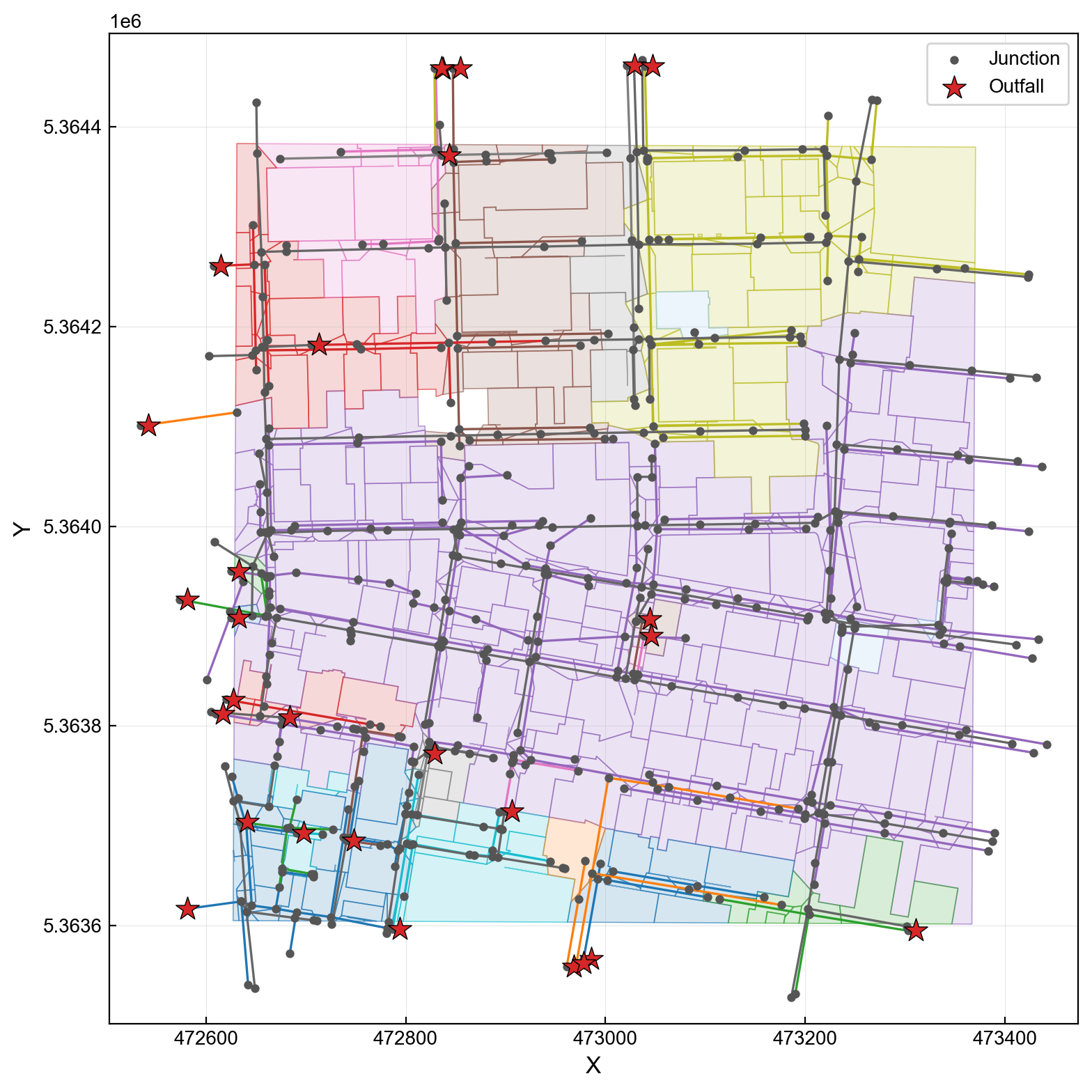
The audit layer consolidates artifacts, QA checks, and metric provenance into an Obsidian-compatible experiment note. This example catches a recorded peak-flow value that does not match the value re-parsed from the SWMM report source section.
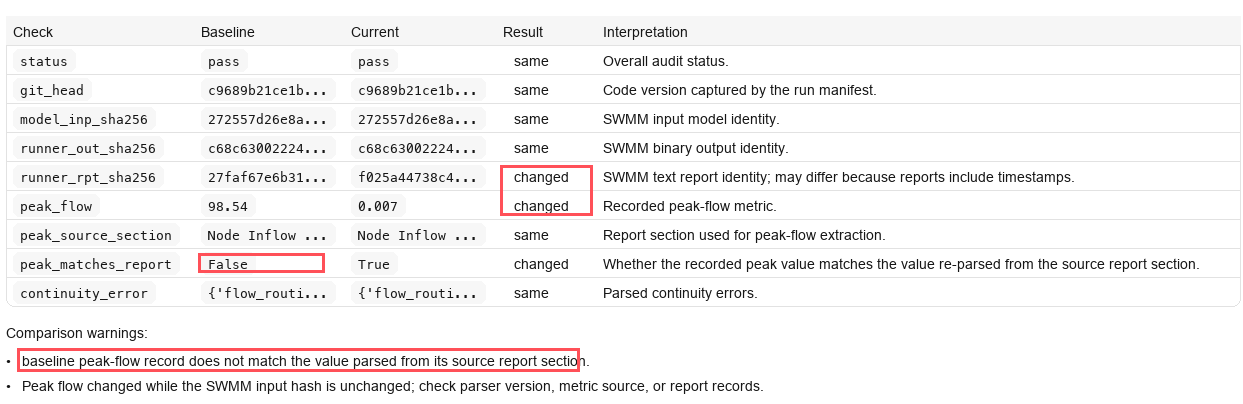
In v0.9.4, failure memory loads at session start and relevant parameter records reach the planner. Re-audits preserve the prior record, and audited runs are protected from in-place agent edits by default. Modelling-memory summaries can propose skill changes, which still require human review and benchmark verification.